
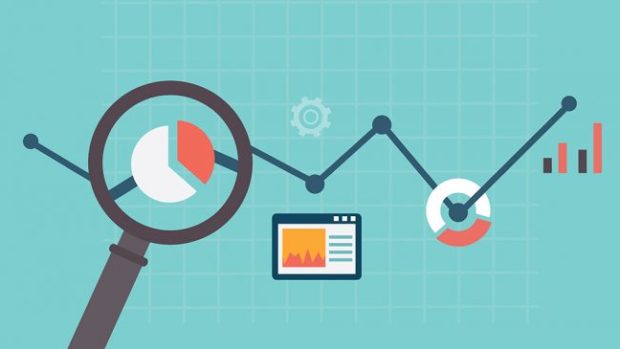
Attribution is widely underused, with many organisations viewing it as a tool rather than what it actually is; a strategic driver. Marketing attribution can answer questions for businesses that can transform their strategies, processes, and performance, yet many are missing out.
Whether you’re investigating on behalf of your business or you’re simply curious about the powerful insights attribution offers, we’ve explored the types of questions and marketing performance insights that can be answered by attribution.
We’ve broken them down into the following key categories:
Let’s explore what types of questions marketing attribution can answer…
| Want to learn how a bespoke marketing attribution solution can answer questions and solve issues related to your organisation specifically?
Get in touch with the team at UniFida, and we can talk to you about how our intelligent Marketing Attribution can help you strive towards more effective and efficient customer journey-based marketing. |
Qs on Marketing Channel Investment: Are You Spending in the Right Places?
One of the biggest benefits of investing in marketing attribution is the ability to gain a comprehensive understanding of how channels in your marketing mix are performing. Marketing attribution data can reveal hidden opportunities in your media mix, helping you optimise both spend and targeting.
By this, we don’t just mean knowing which channels are bringing in the most conversions or generating the most revenue.
We mean understanding the true ROI of each channel, how they interact with each other, what share they hold of the customer journey and how they can be optimised to work together for maximum impact.
| These are just some of the insights you can gain, along with answers to questions like the following:
● Which marketing channels contribute most to conversions? ● What’s the cost per acquisition (CPA) when assisted conversions are included? ● Are we overspending on top-of-funnel channels with little impact on actual conversions? ● What is the incremental value of each additional touchpoint within a channel? ● How do paid vs organic channels interact across the customer journey? ● Which channel is most effective as an initialiser for a conversion? ● Which channel is most effective at closing a conversion? |
What it whittles down to is whether you’re allocating your budget most effectively, and, if not, what do you need to do to change that.
Qs on Customer Journey Behaviour: What Do Your Buyers Actually Do?
Your organisation should (hopefully) have buyer personas that describe your ideal customers and their behaviours.
But how well do these personas actually reflect the reality of your buyers’ behaviour? And how does this behaviour vary across different touchpoints, channels, and stages of the customer journey?
Understanding your customers’ behaviours is key to effective marketing and sales strategies.
| Marketing attribution can help you answer customer behaviour-related questions such as:
● How many touchpoints does it take to convert a customer? ● What is the typical time lag between first touch and conversion? ● Which content formats are most engaging at different stages of the funnel? ● What does a high-converting customer journey look like? ● Where are we losing potential customers in the journey? ● Which devices or platforms are involved at different stages? ● Do different customer segments follow different conversion paths? ● What sequence of interactions leads to the highest conversion rate? |
By knowing what your buyers are doing, where they’re doing it, and when they’re doing it, you can optimise your efforts to reach them in the right place at the right time, satisfying those core 7 P’s of the marketing mix.
Qs on Team Performance & Accountability
As well as answering some really important questions about our customers, we also need to consider some key questions about our team’s performance and accountability, which attribution can also help uncover. For example:
| ● Which campaigns or teams are driving the most valuable outcomes?
● What is the contribution of sales vs marketing touchpoints in B2B? ● How effective are lifecycle or CRM marketing campaigns at generating revenue? ● What percentage of conversions can be traced back to lead generation efforts? ● Are we proving ROI to the board or finance team? ● Which teams (content, PPC, sales) contribute most effectively? ● Can we justify keeping or increasing a budget line? |
These questions are really about trying to optimise processes and resources within an organisation. By asking these questions, businesses can gain a better understanding of their marketing and sales strategies, which in turn can help them make more informed decisions.
For example, by knowing the contribution of sales vs. marketing touchpoints in B2B, a company can allocate appropriate resources to each department and determine whether collaboration or alignment between the two teams is needed.
Similarly, tracking the effectiveness of lifecycle or CRM marketing campaigns at generating revenue can help companies refine their targeting and messaging, leading to higher conversion rates.
Everything can always be improved, and marketing attribution can help companies identify such areas of improvement and make data-driven decisions to optimise their strategies.
Qs on Strategic Forecasting: What Should We Do Next?
Forecasting is necessary to plan for the future and make informed business decisions, but are you planning in the most strategic sense?
Data revealed by marketing attribution can greatly aid companies in strategic forecasting, as it provides insights into customer behaviour and preferences. Balance this with your own business objectives and goals to plan the best proactive course of action for your company.
| Some forecasting questions that can guide your strategy include:
● If we increased spend in Channel X, what would be the likely revenue impact? ● What is the diminishing return point for each paid channel? ● Are there high-performing microsegments worth expanding into? ● How should budget shift seasonally based on past performance? ● What types of creative messaging historically improve performance by segment? ● Which campaigns have long-term value even if they don’t convert immediately? ● How can we optimise spend across top-, mid-, and bottom-funnel tactics? |
Does Marketing Attribution Answer Different Types of Questions for B2B vs B2C?
The core mechanics of attribution remain consistent across sectors, but the practical application of insights varies across B2B and B2C. The actual questions may be the same, but the answers may differ due to different target audiences, conversion paths, and campaign objectives.
B2B attribution is often about influence, nurturing, and multi-stakeholder journeys.
B2C, on the other hand, leans heavily on speed, emotion, and campaign agility.
Here are some further differences between B2B and B2C attribution:
| Topic Area | B2B | B2C |
| Sales Cycle | Longer, complex journeys with multiple decision-makers | Shorter, emotionally driven with fewer interactions |
| Key Attribution Need | Identify which content moves accounts through the funnel | Understand which ads and channels lead to quick conversion |
| Important Questions | “What drives pipeline progression?” | “What gets the customer to purchase today?” |
| Stakeholder Insight | Which job roles engage with what content | Which audience segments convert most efficiently |
| Retargeting Impact | Harder to attribute but crucial in mid-funnel nurturing | Highly measurable through cart recovery and email flows |
Whether you’re optimising for enterprise-level deals or rapid-fire purchases, the insight lies in asking the right questions at the right time.
Summary: Attribution is Not Just for Analysts — It’s for Leadership
If you initially considered marketing attribution to solely be concerned with the analysis and optimisation of marketing campaigns, think again. Attribution is also crucial for providing valuable insights to leadership teams, informing business decisions, and aligning strategies across departments.
It’s a strategic tool that benefits the entire organisation, not just the marketing department.
Get Answers to Your Own Attribution Questions With UniFidaIf any of these questions remain unanswered in your own organisation, UniFida can help. Our sophisticated attribution solution provides near-real-time insights into the performance of your marketing campaigns, enabling you to make data-driven decisions and optimise your strategies for maximum ROI. Take a look at our case studies to see how we have helped other intelligent businesses like yours achieve success through better attribution. Or, book a call with us to discuss how we can help you take the next step towards true marketing effectiveness. |
FAQs
What Marketing Attribution Insights Are Most Important?
What’s considered “important” really depends on your specific business goals and marketing strategies. Some of the most common insights companies seek from marketing attribution include:
- Understanding the full customer journey
- Identifying top-performing channels and campaigns
- Determining the most effective touchpoints
- Measuring ROI
- Calculating Customer Lifetime Value (CLV)
- Tracking multi-channel interactions
- Optimising marketing spend and budget allocation
How Does Attribution Improve Marketing Effectiveness?
Attribution improves effectiveness by providing the numbers to act upon. Alone, it cannot shift the trajectory of your marketing efforts, but it forms the starting point for decisions, changes, and optimisations. It prompts towards more effective
- Decision-making
- Budget allocation
- Campaign optimisations
- Target audience adjustments
How Can Marketing Attribution Data Help With Budget Reallocation?
By analysing the performance of different marketing channels and touchpoints, attribution can help identify which channels are contributing the most towards a campaign’s success.
Insights like ROI, acquisition, share of the marketing mix, and customer lifetime value can be gained through attribution. This information can then be used to reallocate the budget towards the most effective channels and touchpoints, ultimately increasing overall campaign performance.
How Can I Use Attribution Insights in Board-Level Reporting?
Attribution insights can also be useful for board-level reporting, as they provide a clear understanding of how marketing efforts are contributing to overall business success.
You can report on KPIs and metrics such as customer acquisition cost, return on investment, and customer lifetime value, all of which can be attributed to specific marketing channels and touchpoints, justifying the allocation of resources and budget to these channels.
Which Marketing Attribution Models Are Best for Multi-Channel Marketing Campaigns?
Multi-Touch Attribution or customer journey-based attribution models are the most effective for tracking and evaluating the performance of multi-channel campaigns.
These models take into account all touchpoints along the customer journey and assign credit to each one, giving a more accurate understanding of how different channels are contributing to conversions.
What Can a Marketing Attribution Report Show?
Attribution reports can be refined and customised to show various insights and metrics, depending on the needs of a business.
Some of the common metrics that can be included in an attribution report are:
- Conversion rates
- Cost per acquisition (CPA)
- Return on marketing channel investment
- Customer lifetime value (CLV)
- Which channels perform best as an initialiser vs. a converter
- Time lag between initialisation and conversion
- Number of touches before conversion






Share