
Today’s consumers expect online retailers
to provide more convenient and more personalised delivery options to
accommodate their busy lifestyle needs. According to a new study carried out by
Research Now on behalf of MetaPack, the global leader in eCommerce delivery, consumers will not hesitate to abandon an online purchase if the
delivery option they want is not available.
The findings of the MetaPack ‘Delivering Consumer Choice: 2015 State of eCommerce Delivery’
survey highlight the increasingly crucial role delivery plays in influencing
which retailer a consumer chooses to shop with.
Two-thirds of the 3,000 adults surveyed
(66 per cent) confirm they’ve bought goods from one retailer in preference to another because
the delivery options on offer were more appealing – with 49 per cent saying they’d been
happy to pay more for a better or more convenient delivery option.
“This
clearly highlights how eCommerce Directors that continue to focus solely on
making changes to front-end website capabilities are missing out on an
increasingly obvious and more significant opportunity to drive conversion –
providing delivery services that meet each customer’s personal, complex demands,”
said Kees de Vos, Chief Product and Marketing Officer, MetaPack.
Today’s consumers will not hesitate to
abandon shopping baskets if they encounter unsatisfactory delivery options. Over
half (51%) of shoppers confirm they’d failed to complete an online order due to
poor delivery options, citing, among other reasons, that delivery could not be
guaranteed by a certain date (30%) or would take too long to fulfil (44 per cent).
Furthermore, 76 per cent of shoppers viewed a
retailer’s return options before placing an order, with 51 per cent saying they had failed
to proceed with a purchase because the returns process offered was not easy or
convenient for them.
In terms of what consumers expect from
online retailers, 83 per cent say they want delivery options displayed clearly on the
product page itself. And when it comes to convenience, 86 per cent of shoppers want
fast delivery and 83% say they now expect a guaranteed delivery date. A further
80 per cent go on to say they also expected a dedicated time slot to be given.
The survey was
conducted online with 3,000 respondents across the US, UK, Spain, France,
Germany and the Netherlands to understand consumer demand around delivery. The
findings reveal some interesting differences in delivery expectations between European
and US consumers.
Delivery
preferences vary: Collect in store most popular after home delivery
When it comes to the range of delivery
options used, today’s shoppers utilise a range of services in addition to home
delivery, which remains universally popular with all consumers; 90 per cent of survey respondents
had used this option in the last six months.
Collect in store topped the list of
alternatives to home delivery, and is most popular with UK (47 per cent) and US
shoppers (33 per cent). Delivery to a local shop or pick-up point was the second most
popular choice – especially for 48 per cent of French shoppers – yet just 17 per cent of US
consumers chose to use this option.
By contrast, requesting delivery to their
place of work is most popular with Spanish (14 per cent) and German consumers (12 per cent) but
is least likely to be used by shoppers in France (6 per cent) and the Netherlands (9 per cent).
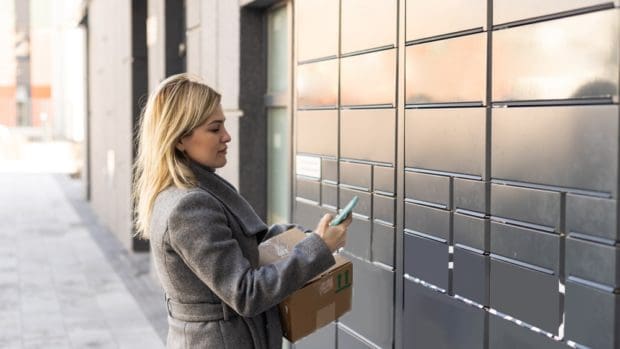
Finally, delivery to a locker, while least popular with most shoppers across
Europe and the US, is a preference for 20 per cent of consumers in Germany, who said they
have used such a service in the last six months.
The delivery experience impacts consumer loyalty: Spanish shoppers least forgiving
A negative delivery experience can turn shoppers off using a retailer again. Over half of Spanish consumers (51 per cent) would never shop with a retailer again following a poor experience and are the most likely to broadcast their displeasure via social media; 52 per cent of Spanish respondents confirm they’ve used social media to share a less than positive experience.
Similarly, German (49 per cent), UK (49 per cent) and Dutch (47 per cent) shoppers would never use a retailer again following a bad delivery experience; by comparison just 36 per cent of French shoppers and 38 per cent of US consumers would elect to withdraw their loyalty from a retailer.
Consumers track delivery progress: Spanish and US consumers most demanding
Consumers are eager to know the status of their online order, with 88 per cent of all respondents confirming they rely on mail or SMS mobile notifications to check progress. Knowing what’s happening to their order is particularly important for consumers in Spain (92 per cent) the US (91 per cent) and Germany (91 per cent); shoppers in Spain and the US are particularly active in this respect, with 18 per cent and 22 per cent respectively checking their order status four or more times.
What’s most important for shoppers: cost, speed or delivering on-time?
When it comes to delivery priorities, today’s consumers want the ability to ‘personalise’ delivery to meet their specific needs in relation to each purchase they make. So, while fast delivery is a priority for 86 per cent of all respondents, 78 per cent said they would wait longer if the goods they’d purchased were less expensive. Meanwhile, being able to trust a retailer to deliver when they say they will was a key priority for one third (30 per cent) of all respondents.
Low cost delivery is a priority for 49 per cent of UK consumers and 47 per cent of US consumers. While Dutch shoppers are least worried about low cost delivery, fast delivery proved most important; compared to 16 per cent of UK shoppers, 30 per cent of Dutch consumers rated this as most important.
Spanish and Dutch consumers have high expectations that a retailer will honour its delivery promises; 38per cent of Spanish consumers and 34 per cent of Dutch consumers rated this as most important for the majority of their online purchases.
Future wants and needs: Different delivery methods appeal to consumers around the world
When asked what delivery services they’d most likely use in the future, there was little appetite for a direct delivery service into a shopper’s car boot or trunk; the option was popular with just 7 per cent of US consumers and 8 per cent of French consumers. The much publicised delivery by drone concept garnered a little more enthusiasm, primarily with US (10 per cent) and German (8 per cent) shoppers.
Having goods delivered to a secure box outside their home, however, proved a winning concept for 21 per cent of US shoppers, while delivery to a secure locker was a popular option for German (15 per cent) and Spanish (11 per cent) shoppers. Meanwhile, pick up of a delivery at a train station proved the most appealing for French shoppers (13 per cent).
UK
highlights from the report include:
- 64 per cent of UK respondents said that
they had bought goods from one retailer over another because they provided more
delivery options - 48 per cent have paid more for goods
because the delivery options were better or more convenient - 62 per cent of UK consumers have not
completed an online order because delivery was not free - More UK consumers (38 per cent) than
any other region surveyed failed to complete an order because in-store pick-up
was unavailable - Whilst free delivery was
important for the vast majority of UK consumer’s purchases (88 per cent), it was lower
than any other region surveyed - UK consumers (83 per cent), however,
are happier than any other region to wait longer for their delivery if the
goods are less expensive





Share