

Finally, the UK government has woken up and announced that it will review the ‘de minimis’ duty-free exemption, which enables consumers in the UK to legally import goods to the value of £135 per delivery.
DCA members, in particular, have long rallied for these tax-free imports to be limited, or severely reduced, to say one delivery per person a year, or to be limited to the sending/importation of personal gifts, as the current scheme has enabled the likes of Shein and Temu, quite literally in some cases, to ‘eat their lunch’. Meanwhile, UK direct merchants, along with their high street retail and multichannel counterparts, pay duty on all imports and have to collect and account for VAT on all qualifying sales (the latter tax adding 20 per cent to their selling price). Then, unlike Shein and Temu, British employers must by law pay and treat their employees fairly, pay national insurance contributions for them, offer paid holidays and sickness leave, meet regulations on providing safe working spaces, etc. All in all, this amounts to a very unfair disadvantage for lawfully trading in their own country.
That it has taken the media coverage of Donald Trump’s war on customs exemptions and his imposition of extraordinarily high tariffs on products produced in China speaks volumes, but the ‘war’ against the unfair playing field has finally begun here in the UK and across the channel.
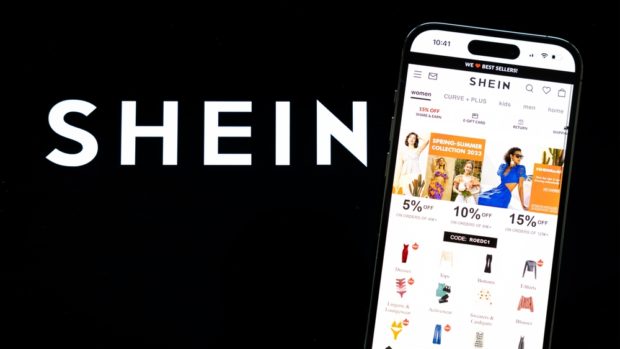
As has been widely reported here, Asos, Boohoo (or should that be Debenhams?), and a host of other lower-end fast fashion businesses have experienced near annihilation due to the relentless push of Shein and Temu into the UK market which, able to duck all local market taxes, have been free to sell to consumers here at cut throat, unmatchable prices. Many Chinese manufacturers are also selling direct to consumers via established online marketplaces like Amazon and eBay.
The quality of much of what UK consumers are buying via Shein and Temu and these other sources may be somewhat questionable, but this seems not to deter customers from buying more. It is so cheap they can throw it away. Many charity shops refuse donations of secondhand or unworn (with labels attached) Shein clothing, just as certain of them also reject Boohoo garments or unknown Chinese brand electrical products. All may photograph well, but the quality can be shockingly poor.
The scale of the damage to the UK fashion and homewares sector caused by the duty exemption is markedly visible. No one can fail to see the empty high street shops across the UK or appreciate that UK retailers have been exploited and treated as cash cows by landlords, the government with its increases in employers’ National Insurance contributions, councils collecting business rates, energy suppliers et al.
Further, the tariffs being levied by the United States on goods from many overseas countries will also affect all goods originally produced in China at the rate set for Chinese goods, and potentially charged in addition to the tariff set for the final exporting overseas country, even if it is the UK. This will result in pricing most Americans, who will have lost the ‘de minimis’ tax break, out of buying ‘foreign’ brands, no matter how covetable they may be.
There are already stories about Chinese firms now brazenly marketing high end designer knock-off products to tempt US consumers to buy fake luxury handbags for $000’s rather than the $0000’s charged for the genuine article. The realisation that the high-end genuine brands’ products are made in China anyway, in the same factories as the fakes, has no doubt shocked consumers just as it has terrified the brand owners.
Brands and retailers globally now face all manner of supply chain difficulties as they battle to secure suppliers outside of China and other Trump targets, so as not to lose the key American export market. For brands and retailers in the US, as well as here, it is hard to fathom how they can conjure up stock from other countries, even their own, when they have become so utterly and perhaps fatally reliant on China. It is being said that Shein has incentivised its suppliers to start manufacturing in Vietnam, which could help it to avoid Donald Trump’s tariffs on China, but there is, of course, nothing to stop the tariff on Vietnam-sourced products from increasing if this ‘strategy’ is deemed to be unpalatable.
Understandably, retailers of all sizes are exceptionally nervous about the immediate future and how Donald Trump’s actions will impact their ability to do business. The UK government has, it seems, finally realised that the UK needs profitable merchants and successful, covetable, exportable brands to support its agenda. Having said that, there is no confirmation on when it will review the ‘de minimus’ issue, or if/when it will find a way to levy and collect taxes from all of the overseas businesses, including the USA, which are generating billions, tax-free, from UK consumers.
Shein, for its part, has already raised its prices for the US market. From May, the US government is set to levy a US $100 per-item postal fee for incoming parcels from China. The big question now is whether Shein’s planned (and UK government-approved) flotation on the London Stock Exchange will go ahead in such turbulent trading times.



Share