
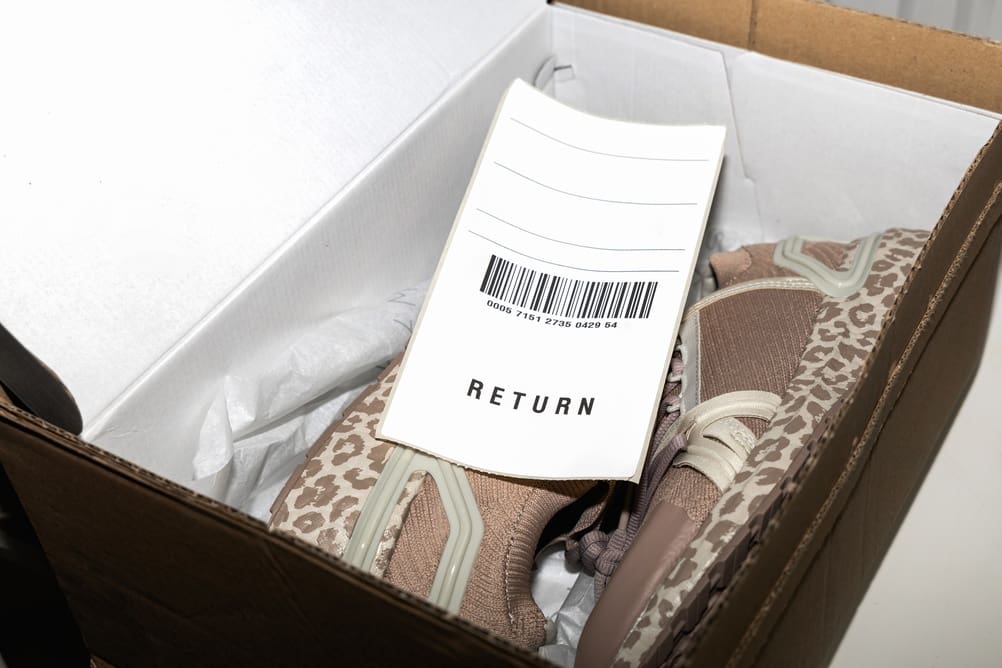
Black Friday is coming and for most retailers, the returns conversation is already the wrong one, according to Chargebacks911, a global leader in dispute resolution and chargeback management.
The industry is focused on how to tighten policies, add friction and cut losses and that is understandable. According to Appriss Retail’s 2026 Total Retail Loss Benchmark Report, US retailers processed $706 billion in returns last year, of which $100 billion, or 14.2 per cent, represented preventable fraud and abuse. That splits into $14 billion in outright fraud and $86 billion in policy abuse: wardrobing, bracketing and the full spectrum of behaviors that exploit generous return windows without technically breaking any laws.
The response from merchants has been logical: tighten up. Add return fees, narrow the window and require proof of purchase but the problem is that the results are anything but straightforward. The NRF and Happy Returns 2025 Retail Returns Landscape Report found that nearly two-thirds of consumers admit to at least one costly returns behavior anyway. And separate research reported by eMarketer found that 44 per cent of merchants who introduced return fees saw fraud go up, compared with only 42 per cent who saw it fall.
The commercial consequences extend beyond fraud losses – according to Appriss Retail’s 2026 Total Retail Loss Benchmark Report, eight in ten shoppers say a positive returns experience makes them more likely to purchase from a retailer again. Tightening returns policies may help address abuse, but retailers also need to consider how those changes affect legitimate customers and future sales.
“Here is the trap retailers keep falling into,” said Monica Eaton, Founder and CEO of Chargebacks911. “They make returns easier and abuse goes up. They make returns harder and customers walk away. And some of that dissatisfaction can resurface as a chargeback instead. That is not necessarily a better outcome as it can be a more expensive problem dressed up as a solution.”
The chargeback consequence matters because it is not always immediately visible. Chargebacks911’s 2026 Chargeback Field Report, found that 27.1 per cent of merchant returns already involve some form of refund abuse. And 61.8 per cent of merchants report that chargebacks have increased over the past three years, with friendly fraud growing faster than overall chargeback volumes.
“We talk to merchants every day who are absorbing losses from both sides,” said Eaton. “Returns abuse on one side, chargebacks on the other. Treating them as completely separate problems makes it much harder to see the patterns connecting them. If you only look at one side of the customer journey, you are only seeing half the problem.”
The merchants who handle this period most effectively are not those with the strictest return policies but those that can see the connection between what happens at the point of return and what happens weeks later in the dispute system, which customers are appearing in both, which patterns are repeating and where an earlier conversation with a customer might have prevented a chargeback entirely.
“Peak season is not the time to discover that your returns data and your dispute data live in different systems and nobody is looking at both,” said Eaton. “The question retailers should be asking right now is not how do I stop returns but has to be how do I tell the difference between a genuine customer and a pattern of behavior that is costing me money. That distinction is where the problem actually gets solved.”






Share