
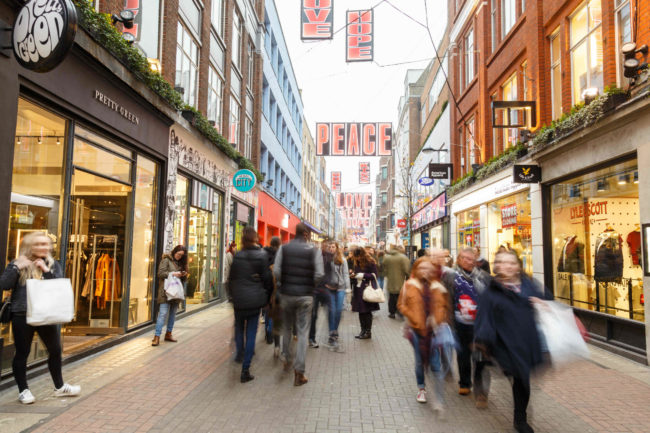
As anticipated, January delivered a post-festive reset for UK retail footfall. Following a strong December, boosted by Boxing Day trading, January 2026 recorded a -20.8 per cent month-on-month decline across all UK retail destinations. While it sounds severe in isolation, this pattern closely mirrors long-term seasonal trends seen in previous years for January as households rein in spending following the festive period.
What is more telling is the modest year-on-year decline of -1.1 per cent, which likely reflects external pressures influencing consumer behaviour in January. One of the key driving factors was likely to be adverse weather conditions; Storm Goretti, snow and sustained heavy rainfall disrupted travel and daily routines, and likely contributed to a -2.5 per cent year-on-year drop in weekday footfall. The impact was particularly notable in the West Midlands (-5 per cent) and East Midlands (-4.9 per cent), where conditions may well have impacted discretionary trips significantly.
Despite this, consumer resilience remains evident. When conditions improved, shoppers returned. Weekend footfall increased by +2.6 per cent year-on-year, suggesting consumers are becoming more deliberate about when they visit physical destinations, concentrating trips into clearer weather windows and prioritising essential spend on groceries for example. This was further reinforced by retail park performance; the only destination type to record annual growth (+1.1 per cent), supported by a +4.1 per cent uplift in weekend visits as their attraction for convenience-led and multi-purpose trips continue.
This same pattern helps explain the more varied performance seen elsewhere. Office-dense locations within Central London revealed momentum, with MRI Software’s Central London Back to Office benchmark recording a +2.4 per cent uplift year-on-year, reinforcing the continued return to workplaces following the festive break and the growing contribution this makes to towns and cities. In contrast, high streets (-2.3 per cent YoY) and shopping centres (-0.8 per cent YoY) experienced a slightly tougher month, reflecting the ongoing challenge of accessing outdoor based destinations when weather pressures persist. Accessibility, ease of navigation and a clear reason to visit remain critical differentiators in this landscape.
Looking ahead, February may well present a more optimistic window for retail leaders. Consumer confidence edged up by one point to -16 (Nielsen IQ) in January, driven by improving perceptions of personal finances. With Valentine’s Day falling on a Saturday this year, a greater focus is expected on experiential spending, particularly across destinations that combine retail with food, beverage and leisure. Last year’s data reinforces this opportunity, with Valentine’s Day 2025 driving a +21.8 per cent uplift in footfall across all UK retail destinations week on week, however retail parks benefitted the most recording an +11.7 per cent uplift year on year, as they continue to broaden their retail, leisure and hospitality offerings.
Retailers are increasingly proactive in shaping demand rather than waiting for it. MRI Software’s Insights from the Inside* shows that around 70 per cent of retailers plan to leverage social media this year as a core driver of in-store engagement. As Valentine’s Day and the February half-term holidays approach, retailers will need to think about how they provide shoppers with a clear reason to visit; using digital channels to prompt the trip but relying on the in-store experience to seal the deal. Retailers that use data to understand performance across their entire portfolio are better placed to improve efficiency and adapt to how consumers are using their physical space.





Share