
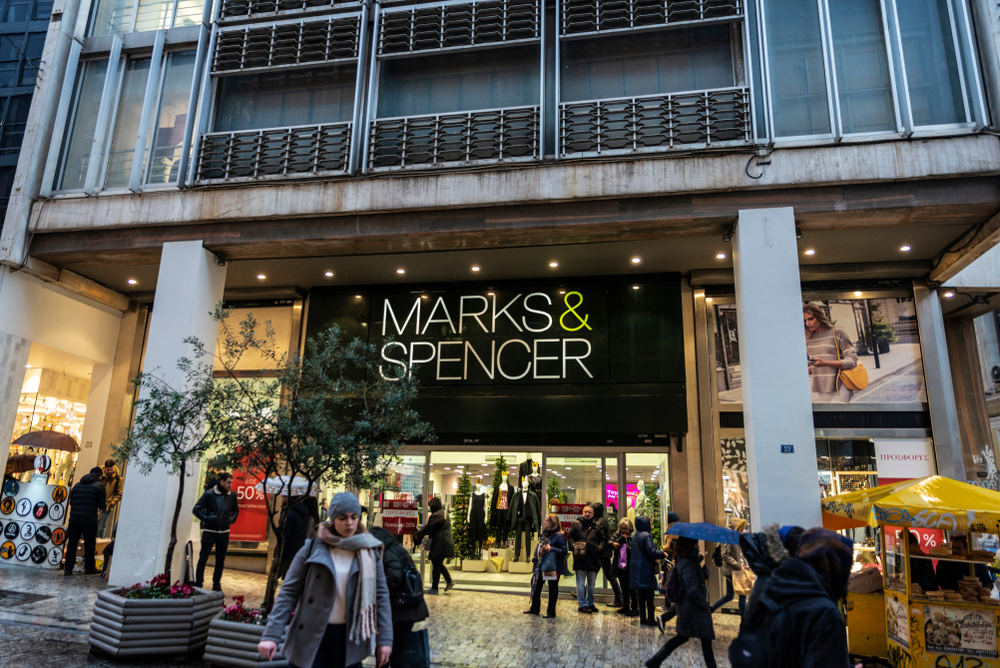
Marks & Spencer has released its full year results for the 52 weeks ended 28 March 2026, in what it described as a ‘year of two halves’. Adjusted profit before tax was £671.4m, down from £881.1m, with statutory profit before tax dropping 28.8 per cent to £364.6m.
Unsurprisingly, sales of fashion, home and beauty declined 7.7 per cent due to the impact of the cyber attack during the first half and pause in online trading, with costs related to the incident coming in at £131.3m. But food sales grew 7 per cent with customer numbers and market share growing.
Commenting on the results, M&S CEO Stuart Machin said:” That was an extraordinary year. We were laser focused on our customers, worked incredibly hard to recover our business, and we came out stronger.”
“A resilient balance sheet supported by the hard work done on our cash position in recent years allowed us to absorb the cost of disruption without compromising our financial health. With strong net funds we continued our transformation at pace, completing our most ambitious year in a decade of opening new and renewal stores alongside significant advances in supply chain and digital capability.”
“Food was our standout performer as more customers than ever chose M&S Food for its quality, innovation, and value. Performance accelerated in the second half, returns were strong, and we continue to outperform the market with the prospect of more growth to come.
In Fashion, Home & Beauty we delivered leading style credentials at the best possible value, and this resonated with customers. Recovery has taken longer, but there is strong growth potential. To support this, we have accelerated our supply chain improvements, acquiring a fully automated fashion distribution site in Lichfield to increase capacity and deliver new styles faster. ”
Robyn Duffy, consumer markets senior analyst at RSM UK, said: “M&S has delivered a remarkable sales performance, with revenues surging around 25% despite suffering one of the most disruptive cyber attacks ever faced by a UK retailer. Online operations took 15 weeks to become fully operational again, while store stock availability was disrupted for weeks, inevitably weighing on sales. However, the strength of M&S’s underlying strategy – particularly the continued expansion of its food business – enabled the retailer to recover lost ground rapidly once operations normalised. It was an unprecedented event, but what now looks equally unprecedented is the scale of the recovery.
“Food is the jewel in the crown and continues to outperform the wider grocery market as consumers remain willing to selectively trade up for quality and convenience. At the same time, improving style perceptions around M&S’s clothing ranges – particularly within womenswear – suggest the fashion business has the potential to deliver stronger sales momentum this year. The key takeaway is that customer demand for the brand appears materially stronger than it did just a few years ago.
“Looking ahead, the business remains firmly focused on expanding capacity to support future growth, accelerating technology transformation and continuing investment across its store estate. That continued emphasis on long-term operational capability and scalability positions M&S well to move beyond the disruption caused by the cyber attack and refocus on driving sustainable future growth.
“As M&S emerges from the disruption caused by the cyber attack, it now enters a more challenging external environment. Rising energy prices and conflict-driven inflation are likely to place renewed pressure on discretionary spending this year, with Clothing & Home particularly exposed to any weakening in consumer confidence. At the same time, growing political uncertainty risks adding a further drag on household sentiment. The core proposition is clearly working, but the key swing factor for the year ahead will be how consumers respond to another squeeze on real incomes.”




Share